M. P. Möller
Opus 3060, 1921
University of Virginia
McIntire Amphitheater
Charlottesville, VA, US
41 Ranks - 2,245 Pipes
EXPLORE IMAGESVIEW STOPLISTSomething not quite correct?Suggest an Edit
IMAGES
Something missing or not quite correct?Add ImageorSuggest an Edit
STOPLISTS
Something missing or not quite correct?Add Stoplist
CONSOLES
Builder: M. P. Möller
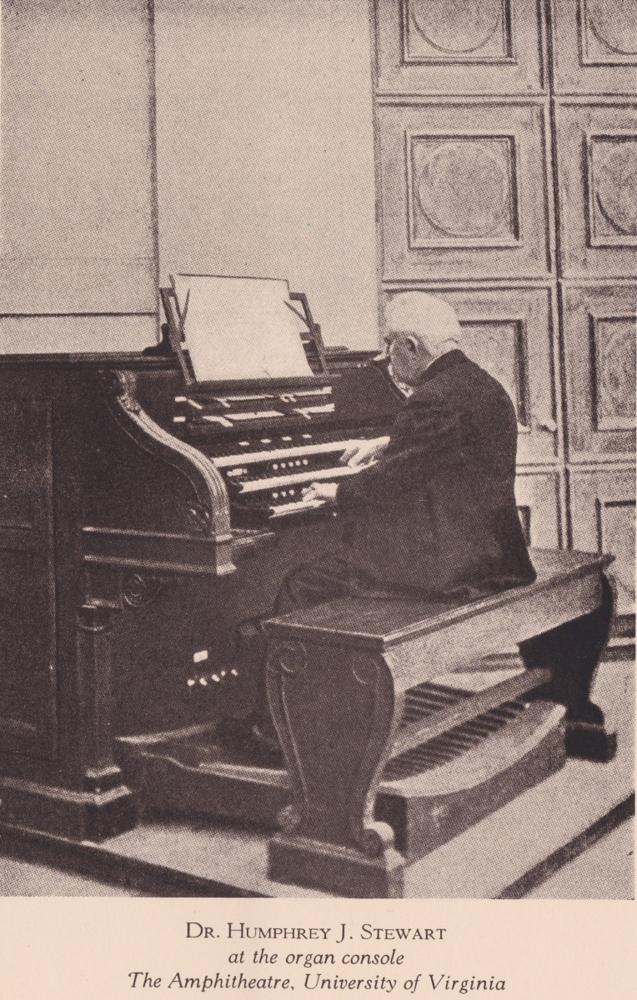
Position: Movable Console
Design: Traditional With Roll Top
Pedalboard Type: Concave Radiating (Details Unknown)
Features:
3 Manuals (61 Notes)32 Note Pedal4 Divisions31 Stops41 RegistersElectrical Key ActionElectrical Stop ActionCrescendoCombination Thumb Piston(s)Coupler Toe Piston(s)Sforzando Thumb Piston(s)Sforzando Toe Piston(s)Stop Layout: Stop Keys Above Top Manual
Expression Type: Balanced Expression Shoes/Pedals (Details Unknown)
Combination Action: 'Hold and Set' Pneumatic/Mechanical
Control System: Unknown or N/A
Something missing or not quite correct?Add ConsoleorSuggest an Edit
DETAILS
This instrument is: Not ExtantandNot Playable in this location
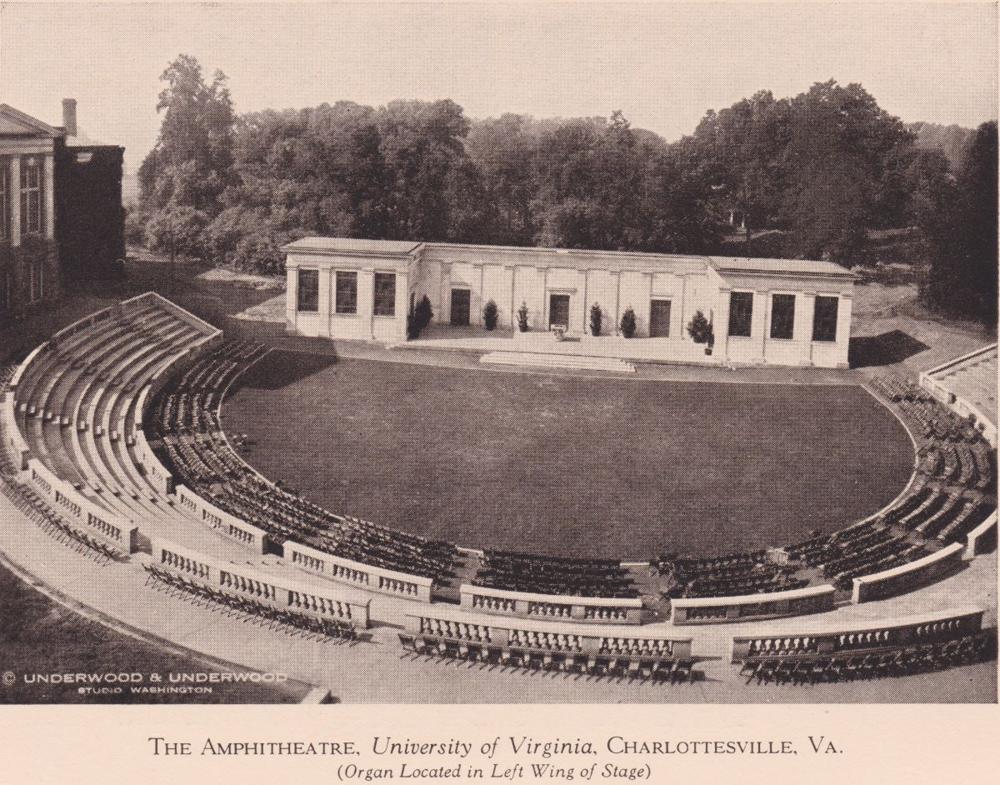
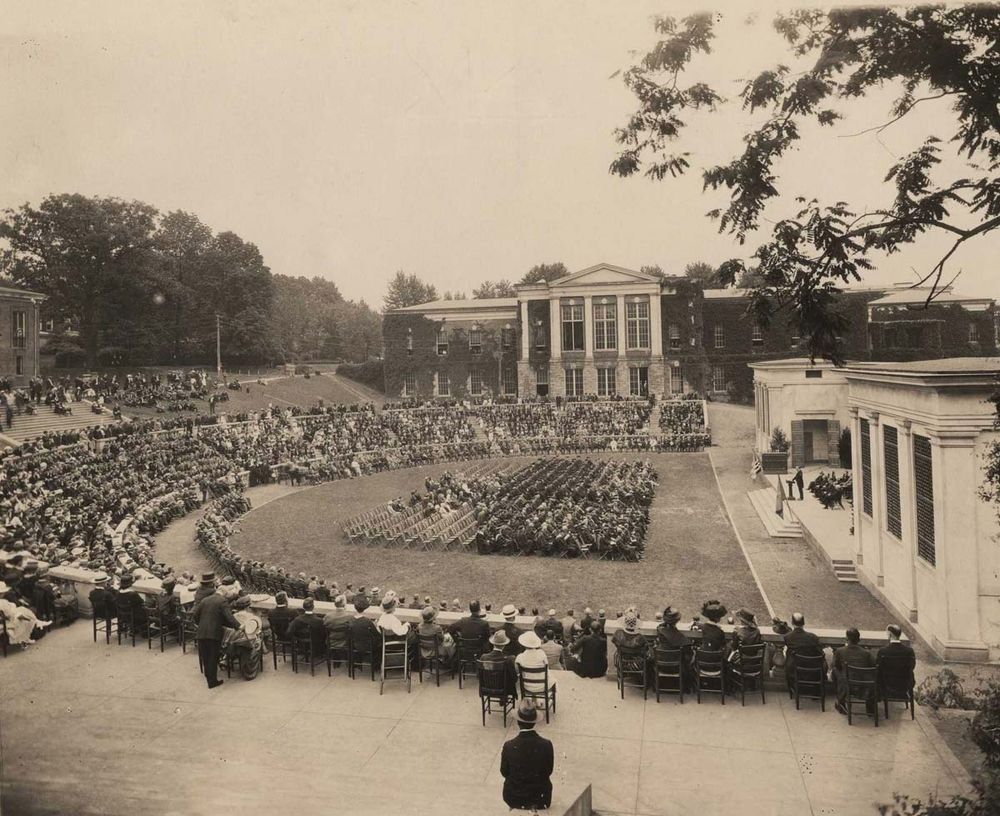
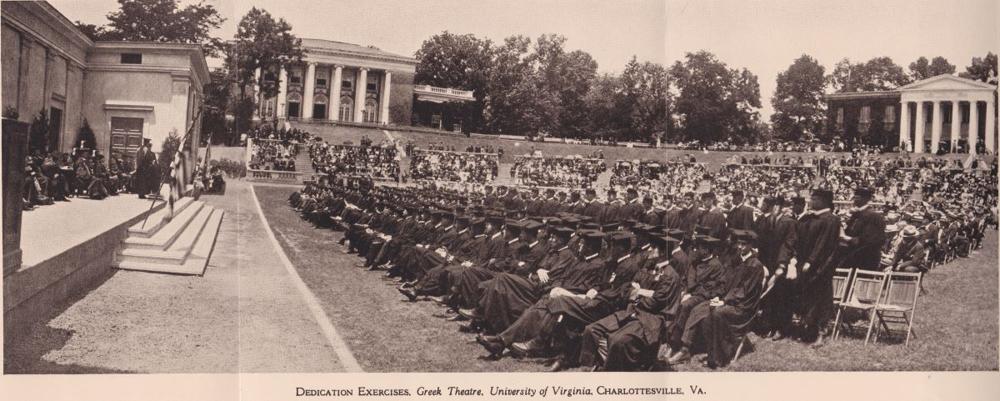
As built, the amphitheatre included an outdoor organ in a chamber to the left of the amphitheatre stage. The organ, designed by M.P. Moeller, was constructed explicitly for "open air" use. According to a booklet published by the builder:
One wing of the stage group was constructed to house the organ. This concrete chamber is divided into four separate sections or sub-chambers. Two of these house the organ proper. The openings, for tone egress, are filled with bronze screens, back of which are the expression shutters for the various departments, and, in addition, there have been provided rolling steel shutters to fully protect the organ from the weather. In a third room is located the large electric blower ... to which is directly connected the low voltage compound electric generator which produces the current for the organ action ... The console, or keyboard, is of movable type, permanently mounted, together with the player's bench, on a special platform on rollers... When the organ is not in use, the entire console unit is housed in the fourth chamber.
The specifications of the organ were jointly designed by the builder and by Arthur Fickenscher [Then head of the UVA Music Department].
Reports from University faculty indicate that the organ could be heard "a mile away" and that it was designed for playing loud music, many of the traditional quieter stops not being included in its construction. The organ was still in use and playable in the early 1960s, but the organ and console had sustained damage due to mismanagement of the weather shutters. In the early 1980s the organ was removed and presumably destroyed.
from https://en.wikipedia.org/wiki/McIntire_Amphitheatre
Database Manager on December 7th, 2011:
Updated through online information from Jeff Scofield. -- Möller's comment in the announcement in THE DIAPASON said "as power was considered a great essential in this instrument, because it is to stand outdoors, the specifications were made with this in mind, and many of the softer tones were omitted."
Database Manager on December 5th, 2011:
Updated through online information from Jeff Scofield.
Database Manager on March 9th, 2011:
Updated through on-line information from Bob Moody. -- This organ was in the outdoor amphitheater, not in the chapel. It was a Möller Theater Organ and there were metal roll-up shutters that opened the chambers to let the sound out. In 1962 when I was a student it could be played a bit. A steam pipe had burst and the steam had destroyed the keys in the console to some extent. In addition, the chamber shutters were left open over the winter and there was considerable water damage to the chests. Some time in the 1980's the organ was removed and presumbably destroyed. It is possible that some of the pipework was dispersed, where not damaged beyond repair. Several faculty members replied that you could hear the organ up to a mile away, so it must have been quite loud.
Database Manager on June 10th, 2008:
Identified through information adapted from E. M. Skinner/Aeolian-Skinner Opus List, by Sand Lawn and Allen Kinzey (Organ Historical Society, 1997), and included here through the kind permission of Sand Lawn: Replaced by Aeolian-Skinner Opus 1220 (1950).
Confirmed against the Moller opus list.
Something missing or not quite correct?Add NoteorAdd WebpageorAdd Cross ReferenceorSuggest an Edit