Skinner Organ Co.
Opus 524, 1925
Holy Trinity Episcopal Church / St. Ann & the Holy Trinity Episcopal Church
157 Montague at Clinton
New York City: Brooklyn, NY, US
64 Ranks - 4,244 Pipes
EXPLORE IMAGESVIEW STOPLISTSomething not quite correct?Suggest an Edit
IMAGES
Something missing or not quite correct?Add ImageorSuggest an Edit
STOPLISTS
Something missing or not quite correct?Add Stoplist
CONSOLES
Builder: Unknown
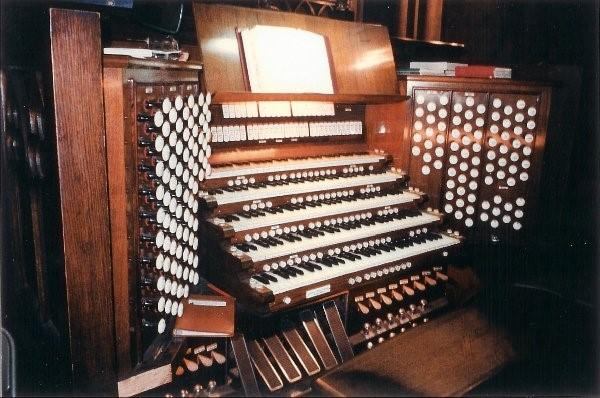
Position: Console in Fixed Position, Center
Design: Traditional With Roll Top
Pedalboard Type: Concave Radiating (Meeting AGO Standards)
Features:
4 Manuals (61 Notes)32 Note Pedal57 Stops68 RegistersElectrical Key ActionElectrical Stop ActionCrescendoCombination Thumb Piston(s)Combination Toe Piston(s)Coupler Thumb Piston(s)Coupler Toe Piston(s)Sforzando Thumb Piston(s)Sforzando Toe Piston(s)Stop Layout: Drawknobs in Vertical Rows on Angled Jambs
Expression Type: Balanced Expression Shoes/Pedals (Meeting AGO Standards)
Combination Action: Adjustable Combination Pistons
Control System: Unknown or N/A
Something missing or not quite correct?Add ConsoleorSuggest an Edit
DETAILS
This instrument is: Extant and Playable in this location
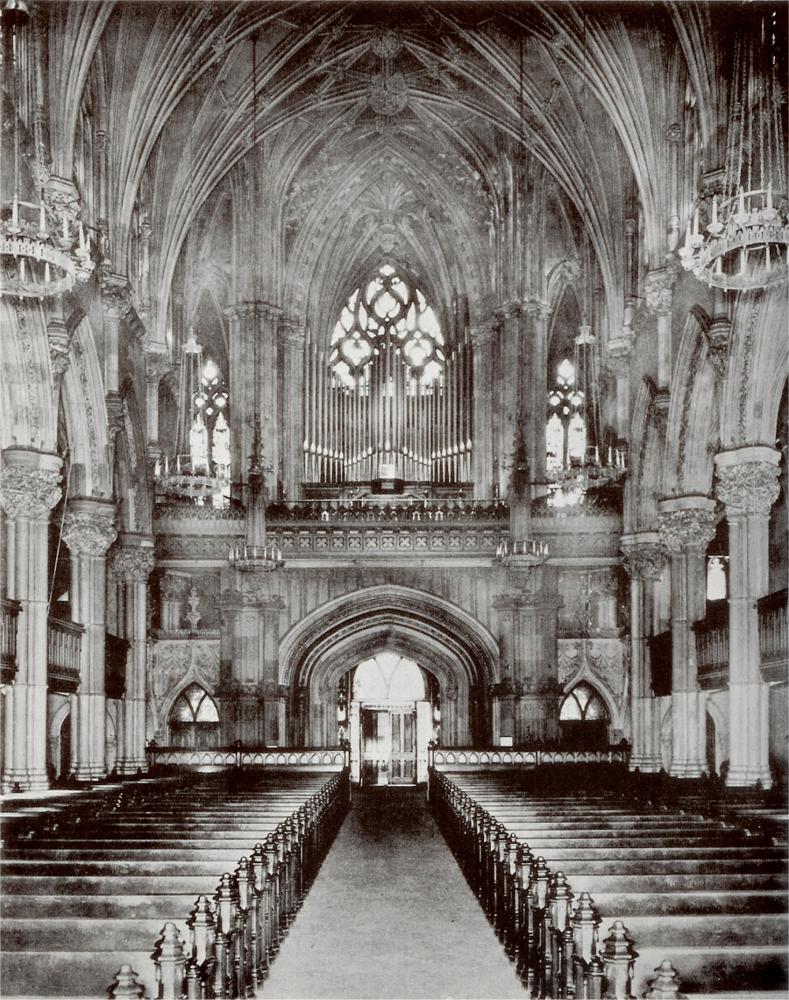
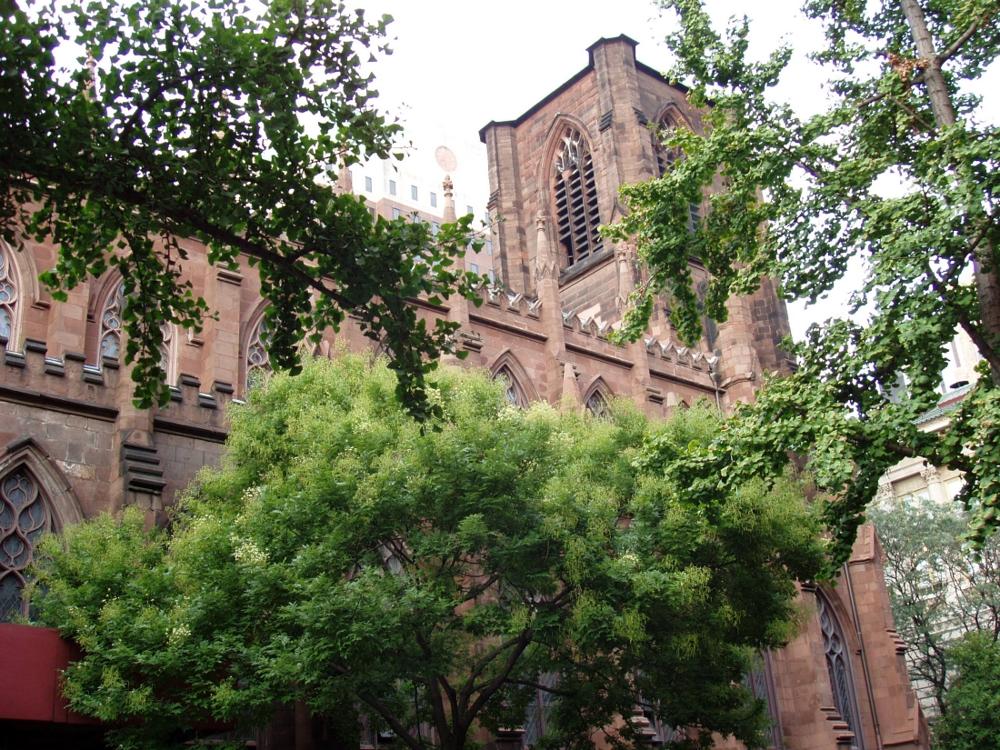
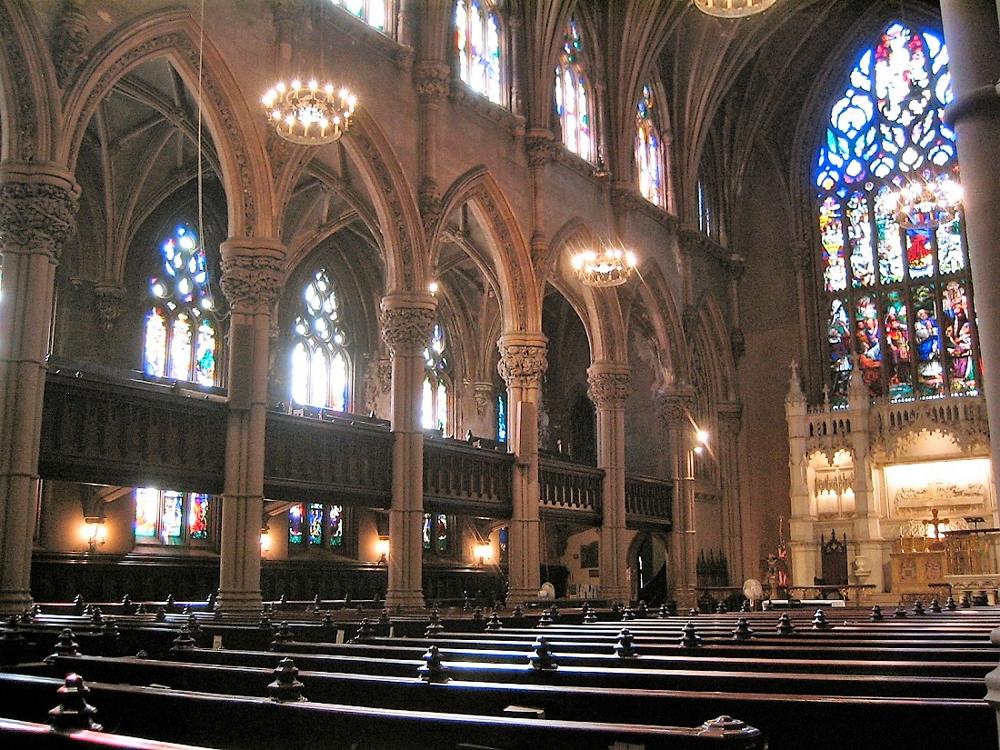
From the NYC AGO NYC Organ Project: The Protestant Episcopal Church of the Holy Trinity in Brooklyn Heights was designed by Minard Lafever (1798-1854) and completed in 1848. Lafever's design is considered one of the finest masterpieces of the Gothic Revival style in America. The church's elaborate interior features a soaring nave highlighted by lierne vaulting which employs wood-frame plaster vaults. More than 7000 square feet of stained glass by William Jay Bolton depict the "Jesse Tree" of Christ’s ancestry; this astounding collection is perhaps the most significant early American stained glass installation. Bolton’s organ loft window is on permanent exhibition in the American Wing of the Metropolitan Museum of Art.
A clash between the bishop and rival factions within the parish led to the closure and dissolution, in 1959, of Holy Trinity Church. In 1969, St. Ann's Church, faced with a crumbling building only a few blocks away, moved into the former Holy Trinity Church, resulting in the present name of St. Ann and the Holy Trinity. At this time, the E.M. Skinner organ was modified, and a new five-manual console was installed with Virgil Fox as the consultant. In 1979, the New York Landmarks Conservancy intervened to save the aging church and stained glass, and in 1983 the St. Ann Center for Restoration and the Arts was founded. The center’s record of success included the restoration of the chancel window, 64 stained glass windows by William Bolton in the nave (considered the earliest of their type in America), and the exterior fence. With support from World Monuments Fund, a conditions survey was carried out and matching funds were made available from the New York State Bond Act to restore the roof. Today the church is open for services and restoration efforts are moving ahead. St Ann's is also seeking to make the property more self-sustaining through the sensitive development of its adjacent Parish Hall.
In 1968, the Skinner organ was altered and enlarged by Tom Farrell of Brooklyn. A new five-manual drawknob console was built by the Keates-Geissler Pipe Organ Company of Acton, Ontario, Canada, and installed in 1970. The Keates console had drawknobs that were engraved with an Old English font, and included preparations for many additions. Since that time, the organ has undergone extensive physical and tonal restorative work as funding allowed. Stops that had been loudened were returned to their original volume. In 2003, the Solo division was completely restored and the Tuba Mirabilis, which had been moved to a horizontal position atop the Solo box, was repaired and returned to its original location. The console was rebuilt by John Randolph in 2005, and the Swell reeds were restored by Chris Broome in 2010. The Organ Historical Society awarded its distinguished Historical Citation No. 240 in recognition of the Skinner Organ as an outstanding example of organbuilding and worthy of preservation.
Database Manager on March 6th, 2006:
Updated through information adapted from E. M. Skinner/Aeolian-Skinner Opus List, by Sand Lawn and Allen Kinzey (Organ Historical Society, 1997), and included here through the kind permission of Sand Lawn:
Replaced #142; organ extant; five manual Keates console installed in 1968; considerable alterations by Farrell and Van Zoeren.
Database Manager on October 30th, 2004:
Building formerly that of Holy Trinity Episcopal. 5 manual Keates console added in 1968. Alterations by Farrell and Van Zoeren.
Webpage Links: Opus 524: Church of the Holy Trinity, Episcopal. , NYC AGO NYC Organ Project
Related Instrument Entries: Ernest M. Skinner Company (Opus 142, 1909) , Tom Farrell (1968)
Something missing or not quite correct?Add NoteorAdd WebpageorAdd Cross ReferenceorSuggest an Edit