Geo. H. Ryder
Opus 114, 1883
Originally E. & G.G. Hook & Hastings (1872)
New England Conservatory
Ballroom
Boston, MA, US
19 Ranks
Instrument ID: 18312 ● Builder ID: 5474 ● Location ID: 13296
⬆️ These are database IDs that may change. Don't use as academic reference.EXPLORE IMAGESSomething not quite correct?Suggest an Edit
Plenum Organ Company
🤝 Instrument entries in Massachusetts sponsored by:
We are grateful for the generous support of our sponsors, who make it possible for us to continue our mission of preserving and promoting the rich history of pipe organs across the globe.

IMAGES
Category:
Only show images in a specific category ☝️
Something missing or not quite correct?Add ImageorSuggest an Edit
STOPLISTS
No stoplist details are available. If you have stoplists, please consider sharing them with us.
Something missing?Add StoplistorSuggest an Edit
CONSOLES
Selected Item:
View additional console entries if they exist ☝️
Builder: Unknown
Position: Unknown
Design: Unknown
Pedalboard Type: Unknown
Features:
Stop Layout: Unknown
Expression Type: Unknown
Combination Action: Unknown
Control System: Unknown or N/A
Something missing or not quite correct?Add ConsoleorSuggest an Edit
DETAILS
Switch between notes, documents, and blowers ☝️
This instrument is: Not Extant and Not Playable in this location
Scot Huntington on September 10th, 2020:
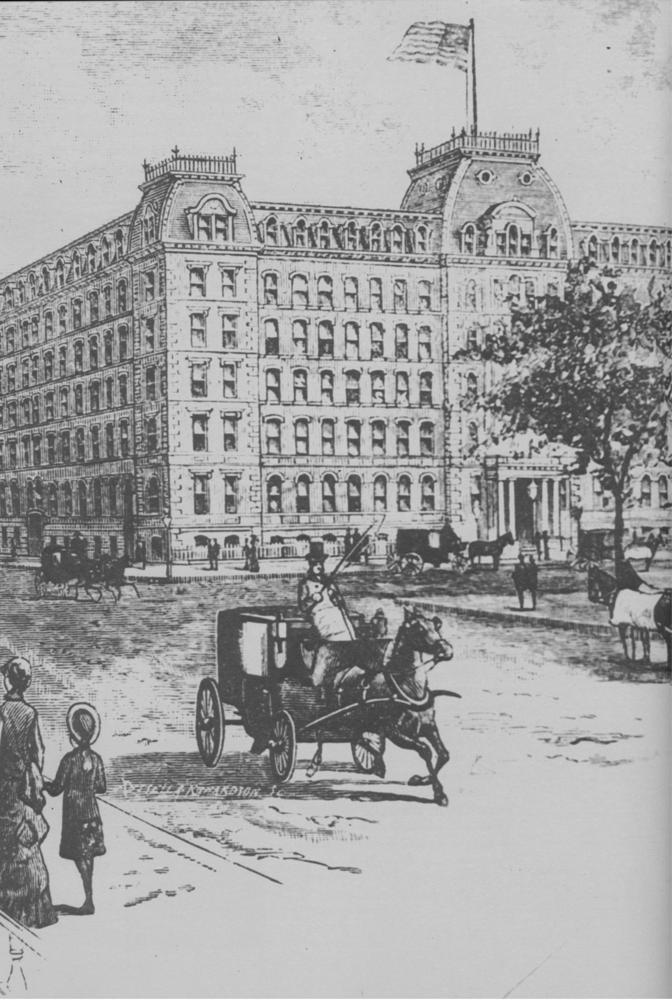
This entry describes the relocation of the New England Conservatory teaching organ from their former rented quarters in the Boston Music Hall, to their new facility in the former St. James Hotel. The exact location of the of organ is murky, and was believed to have been installed in the former ballroom, although contemporary accounts report lectures and recitals took place in the large dining room prior to the construction of Sleeper Hall in 1886. The organ was moved to the new conservatory quarters by Geo. H. Ryder. The performance spaces were wholly inadequate, and in 1886 a new 550-seat hall was built adjacent to the old hotel, called Sleeper Hall. This had a small stage which could not accommodate the school orchestra, and while still inadequate, was all they could afford and was much better than the hotel rooms. The organ was moved to the stage and a dedicated chamber, again by Geo. H. Ryder, and enlarged by one stop. Accounts of the new installation report the pedal was improved with a bass stop suitable to the accoustics of the new hall. Examination of the organ now in Barre is inconclusive what this stop may have been. The open wood Flute is not of a construction typical for Hook in this period, but was a standard compliment in the two-stop pedals of their smaller instruments. The open wood Diapason 16' appears to be of an age of the rest of the organ, and the chest and rollerboard appear to be all of a piece. One might expect the former locations to have space or height restrictions which could have precluded a Diapason 16, but one could also expect a recycled Diapason of a similar age and style to Hook's work in this organ to be especially hard to find. It will take further forensic examination to determine what the added stop may have been. There are other changes to the instrument in this period: replacement of the Hook drawknobs with oblique, addition of a water motor, replacement of the hitchdown pedal with a balanced swell, as well as possible changes to the action or layout. This project was significant enough that Ryder assigned it an opus number. Which of these changes occurred in 1886, or in 1883 (if any), cannot not now be determined with accuracy. The pitch of the organ when installed was A450, Boston's post-War standard high concert pitch. This was lowered to A435 ca. 1887-1891, ostensibly by Woodberry & Harris. The organ was replaced in Sleeper Hall by an electric-action Farrand & Votey in 1896, and the organ was sold to the First Congregational Church of Barre, Vermont, where it was moved and altered to accommodate the new chamber location, again by George Ryder.
This entry describes the relocation of the New England Conservatory teaching organ from their former rented quarters in the Boston Music Hall, to their new facility in the former St. James Hotel. The exact location of the of organ is murky, and was believed to have been installed in the former ballroom, although contemporary accounts report lectures and recitals took place in the large dining room prior to the construction of Sleeper Hall in 1886. The organ was moved to the new conservatory quarters by Geo. H. Ryder. The performance spaces were wholly inadequate, and in 1886 a new 550-seat hall was built adjacent to the old hotel, called Sleeper Hall. This had a small stage which could not accommodate the school orchestra, and while still inadequate, was all they could afford and was much better than the hotel rooms. The organ was moved to the stage and a dedicated chamber, again by Geo. H. Ryder, and enlarged by one stop. Accounts of the new installation report the pedal was improved with a bass stop suitable to the accoustics of the new hall. Examination of the organ now in Barre is inconclusive what this stop may have been. The open wood Flute is not of a construction typical for Hook in this period, but was a standard compliment in the two-stop pedals of their smaller instruments. The open wood Diapason 16' appears to be of an age of the rest of the organ, and the chest and rollerboard appear to be all of a piece. One might expect the former locations to have space or height restrictions which could have precluded a Diapason 16, but one could also expect a recycled Diapason of a similar age and style to Hook's work in this organ to be especially hard to find. It will take further forensic examination to determine what the added stop may have been. There are other changes to the instrument in this period: replacement of the Hook drawknobs with oblique, addition of a water motor, replacement of the hitchdown pedal with a balanced swell, as well as possible changes to the action or layout. This project was significant enough that Ryder assigned it an opus number. Which of these changes occurred in 1886, or in 1883 (if any), cannot not now be determined with accuracy. The pitch of the organ when installed was A450, Boston's post-War standard high concert pitch. This was lowered to A435 ca. 1887-1891, ostensibly by Woodberry & Harris. The organ was replaced in Sleeper Hall by an electric-action Farrand & Votey in 1896, and the organ was sold to the First Congregational Church of Barre, Vermont, where it was moved and altered to accommodate the new chamber location, again by George Ryder.
Database Manager on May 24th, 2013:
Updated with information from Stephen Pinel for the 2013 OHS Vermont Convention. -- rebuild of existing E. & G.G. Hook & Hasting organ; relocated to Barre, July, 1896
Database Manager on June 16th, 2005:
Identified through information in <i>Descriptive Catalogue of Superior Church Organs Manufactured by Geo. H. Ryder & Co.</i>, published in Boston, January, 1896.
Related Instrument Entries: E. & G.G. Hook & Hastings (Opus 667, 1872) , Geo. H. Ryder (1896ca.)
Something missing or not quite correct?Add NoteorAdd WebpageorAdd Cross ReferenceorSuggest an Edit
Pipe Organ Database
A project of the Organ Historical Society Website by John RoperEditor Login