IMAGES


Something missing or not quite correct?Add ImageorSuggest an Edit
STOPLISTS
No stoplist details are available. If you have stoplists, please consider sharing them with us.
Something missing?Add Stoplist
CONSOLES
Builder: Unknown
Position: Unknown
Design: Unknown
Pedalboard Type: Unknown
Features:
3 Manuals 40 StopsElectrical Key ActionStop Layout: Stop Keys
Expression Type: Unknown
Combination Action: Unknown
Control System: Unknown or N/A
Something missing or not quite correct?Add ConsoleorSuggest an Edit
DETAILS
This instrument is: Extant and Playable in this location
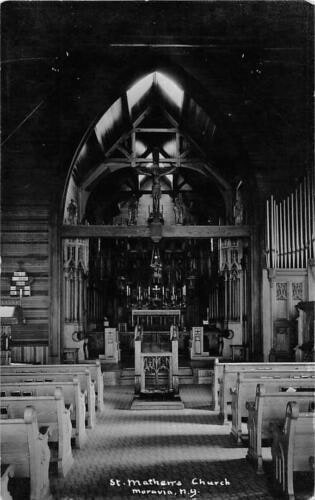
Updated through information from Cullie Mowers: -- (The Rev.) William Sutherland Stevens (1871-1946) was an Episcopal priest, long-time rector at Moravia, who was also something of an organbuilder and representative for Möller in the Finger Lakes region of New York State. He designed a very large organ (actually a Möller but with a Stevens nameplate) only part of which was ever built, including the impressive four-manual stopkey console. Most of the Great, all of the Swell, and most of the Gallery Pedal division were completed. The Chancel Pedal, Echo, Choir and Solo were never installed. Stevens intended the huge instrument for a much larger stone church which he planned to replace the present frame building. There is no visible pipework, and the organ sound does not get into the church very well.
Something missing or not quite correct?Add NoteorAdd WebpageorAdd Cross ReferenceorSuggest an Edit