Schantz Organ Co.
Opus 39, 1948
Originally Salem Church Organ Co. (1897)
Union City Methodist Church
Oak & Plum Street
Union City, IN, US
12 Ranks - 842 Pipes
EXPLORE IMAGESVIEW STOPLISTSomething not quite correct?Suggest an Edit
🤝 Instrument entries in Indiana sponsored by:
We are grateful for the generous support of our sponsors, who make it possible for us to continue our mission of preserving and promoting the rich history of pipe organs across the globe.

IMAGES
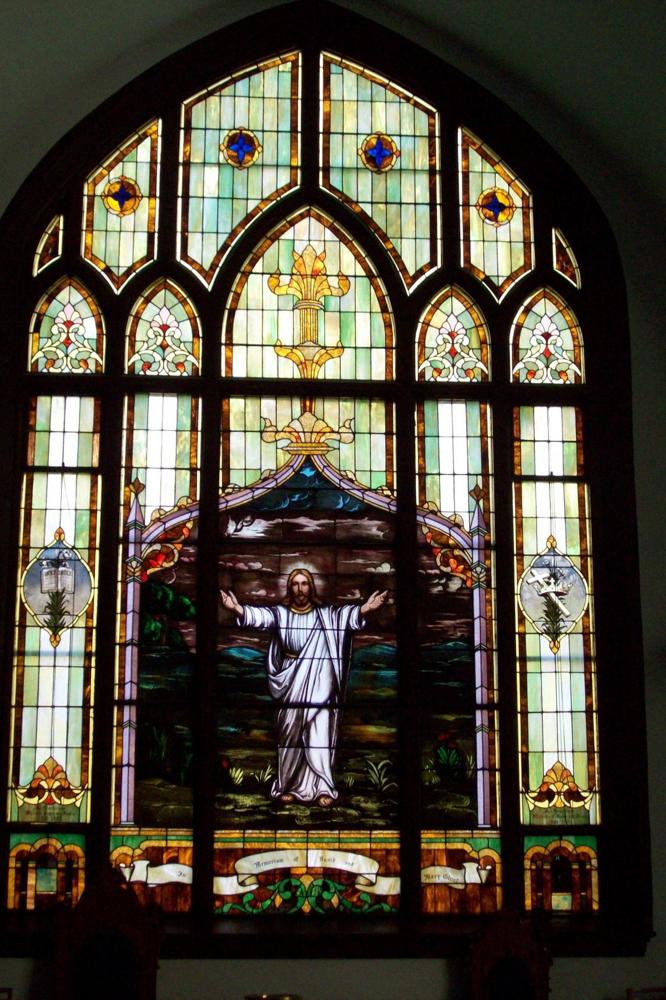
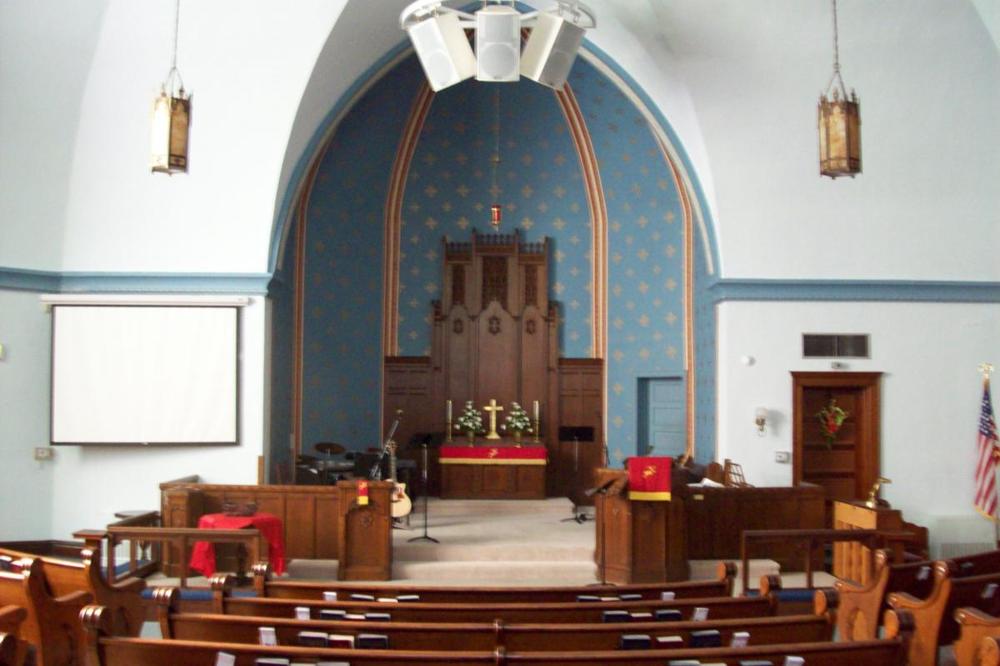
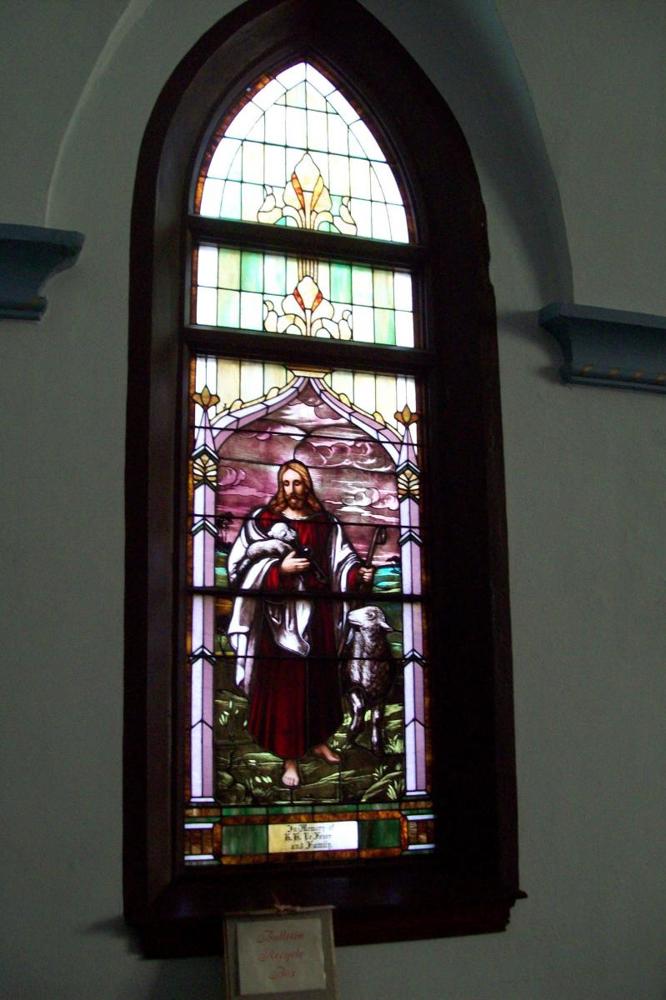
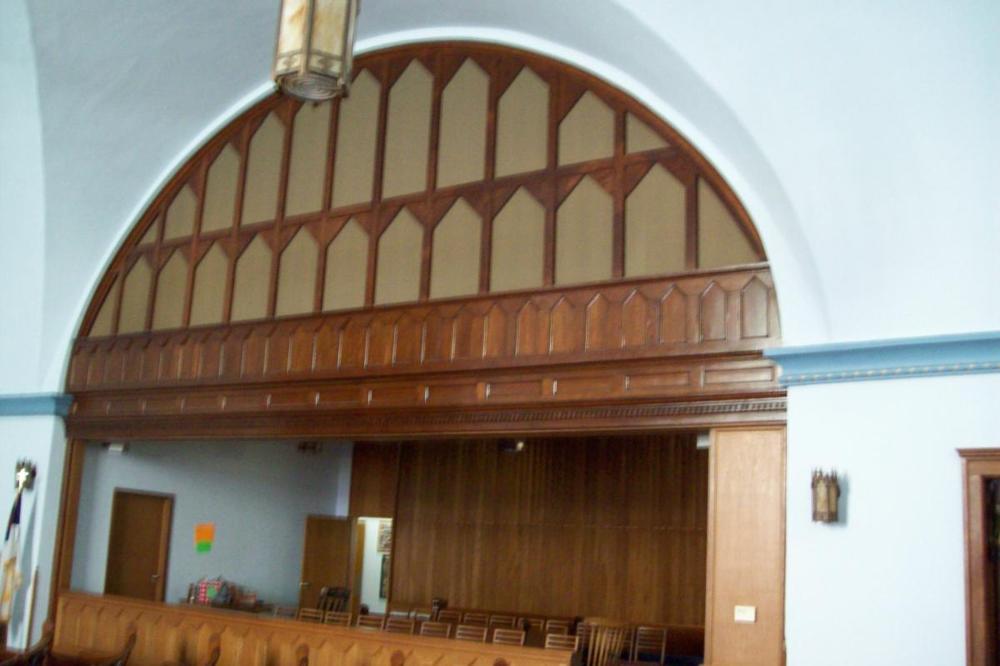
Something missing or not quite correct?Add ImageorSuggest an Edit
STOPLISTS
Something missing or not quite correct?Add Stoplist
CONSOLES
Builder: Schantz Organ Co.
Position: Console in Fixed Position, Right
Design: Traditional With Roll Top
Pedalboard Type: Concave Radiating (Meeting AGO Standards)
Features:
2 Manuals (61 Notes)32 Note Pedal3 Divisions11 Stops20 RegistersElectrical Key ActionElectrical Stop Action✓ Crescendo✓ Combination Thumb Piston(s)✓ Sforzando Toe Piston(s)Stop Layout: Stop Keys Above Top Manual
Expression Type: Balanced Expression Shoes/Pedals (Meeting AGO Standards)
Combination Action: 'Hold and Set' Pneumatic/Mechanical
Control System: Unknown or N/A
Something missing or not quite correct?Add ConsoleorSuggest an Edit
DETAILS
This instrument is: Extant and Playable in this location
This congregation left the United Methodist denomination in December 2022. It is now an independent congregation. The historic name was change by dropping the word, "United" out of the title and became simply, "Wesley Methodist Church." The organ remains intact and is still used occassionally.
Database Manager on January 10th, 2013:
Updated through online information from Timothy E., Conyers. -- There are a total of nine thumb pistons, three for each manual and three general. There is a Great to Pedal 8ft reversible toe stud; a Sforzando reversible toe stud; Balanced Swell pedal; Balanced Great pedal and a Crescendo pedal.
Database Manager on September 17th, 2012:
Updated through online information from Timothy E. Conyers. -- This organ is a rebuild and of an older instrument built by Salem Church Organ Company of Salem, Ohio. The original instrument was the first pipe organ built in Randolph County, Indiana. It was installed in the congregation's second building. In 1909 it was moved into the current building with no alterations being made. There was a water powered motor which was later removed at an unknown date and an electric motor installed.
In 1948 the organ was rebuilt by Schantz Organ Company of Orrville, Ohio, with the majority of pipework from 1897 being reused due to material shortages following World War II. Records indicate little revoicing of existing ranks occurred, thus the original instrument has been preserved. A few additions were made, most notable are a Deagan class D chime of 21 tubular bells; a 49 note set of Harps; and a Gemshorn 16' rank of pipes in the pedal division. A tower broadcasting system was also added which allowed the chimes and/or the organ to be heard from the bell tower. (Note: This broadcasting system was removed sometime after 1995).
During the organ rebuild, the pipes were removed from the pulpit area and into new chambers built in the old balcony area on the right side of the nave. A decorative screen was designed to cover the chambers. Both chambers are under expression. A new detached console was placed on the right front side of the newly designed chancel area. The console is stationary and cannot be moved due to the platform railing, a wall and the platform itself encircling the console. A small opening in the railing allows access to the console.
The new location of the pipe chambers made it difficult for the choir to hear the organ in the newly created chancel apse. The apse had been the former organ chamber. The new divided chancel choir arrangement placed most of the choir further into the apse where the organ was not heard due to walls separating the choir and organ sound. The distance from the pipes was also an issue. It was necessary to place a microphone in each chamber and amply the sound over speakers hidden in the chancel. This resulted in the instrument being amplified throughout the sanctuary, a much needed improvement due to the deep chambers. (Note: This amplification system was removed sometime after 1995 when there was no longer a choir and the divided choir stalls where removed. As a result the entire instrument is much quieter than previously even with all the stops pulled).
For many years the Harp Celeste and Harp Vibrato was unplayable. In the early 1990's the system was "restored" to playable condition.
Historical research complied by Timothy E. Conyers, former organist, for a recital he gave in 1992. Sources: church records, Schantz Organ Co. records and old newspaper articles.
Database Manager on August 25th, 2011:
Identified through online information from Jeff Scofield.
Related Instrument Entries: A. B. Felgemaker Co. (1909)
Something missing or not quite correct?Add NoteorAdd WebpageorAdd Cross ReferenceorSuggest an Edit