Henry L. Fabry (Inc.)
1978
Originally M. P. Möller (Opus 3856, 1923)
St. John's UCC (Reformed) Church
117 N 8th Street
Shamokin, PA, US
32 Ranks - 1,827 Pipes
EXPLORE IMAGESVIEW STOPLISTSomething not quite correct?Suggest an Edit
🤝 Instrument entries in Pennsylvania sponsored by:
We are grateful for the generous support of our sponsors, who make it possible for us to continue our mission of preserving and promoting the rich history of pipe organs across the globe.


IMAGES
Something missing or not quite correct?Add ImageorSuggest an Edit
STOPLISTS
Something missing or not quite correct?Add Stoplist
CONSOLES
Builder: Unknown
Position: Unknown
Design: Unknown
Pedalboard Type: Concave Radiating (Details Unknown)
Features:
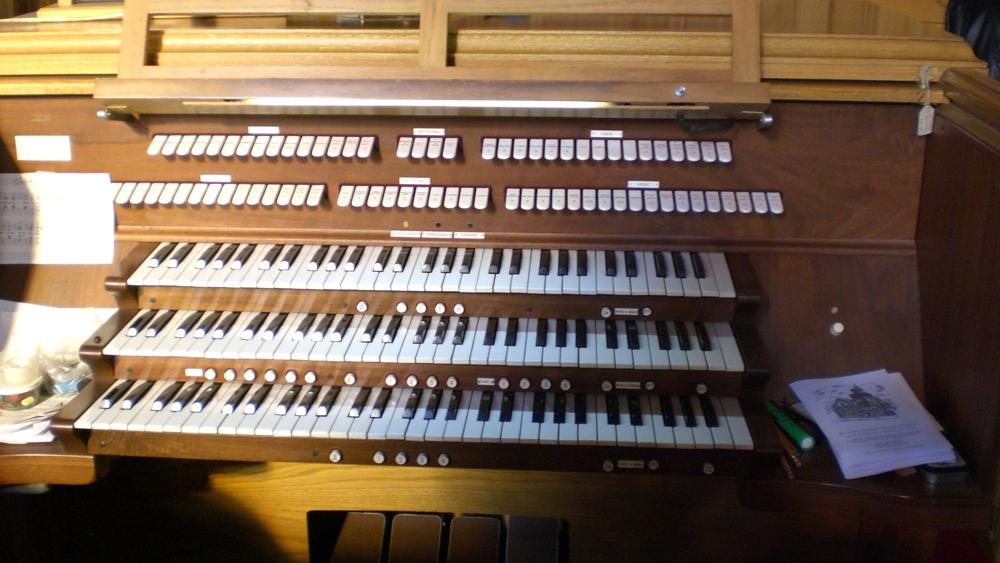
3 Manuals (61 Notes)32 Note Pedal5 DivisionsElectrical Key ActionElectrical Stop ActionStop Layout: Stop Keys Above Top Manual
Expression Type: Unknown
Combination Action: Unknown
Control System: Unknown or N/A
Something missing or not quite correct?Add ConsoleorSuggest an Edit
DETAILS
This instrument is: Extant and Playable in this location
Personal knowledge of the instrument. I was organist here from September 1997 to October 1998. I have kept in touch with the people of the church.
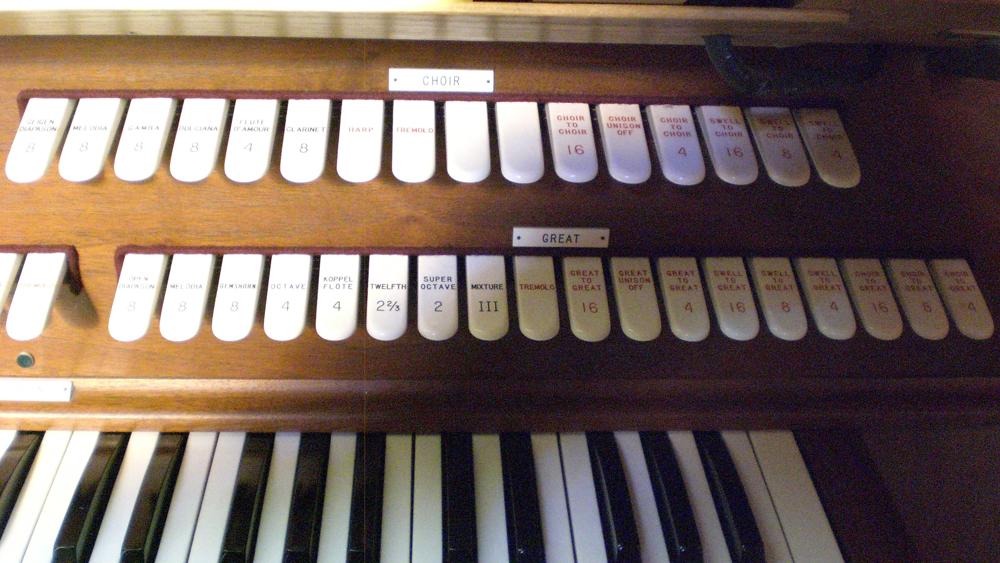
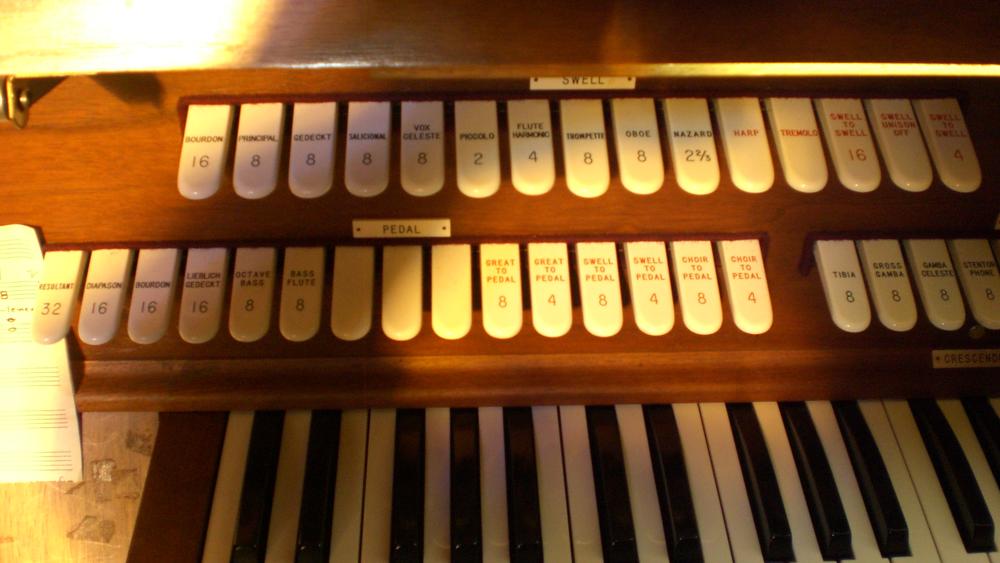
The harp is a 1970's electronic harp that is no longer functional. The Moller harp, which was in the Swell division, was lost during the Fabry rebuild.
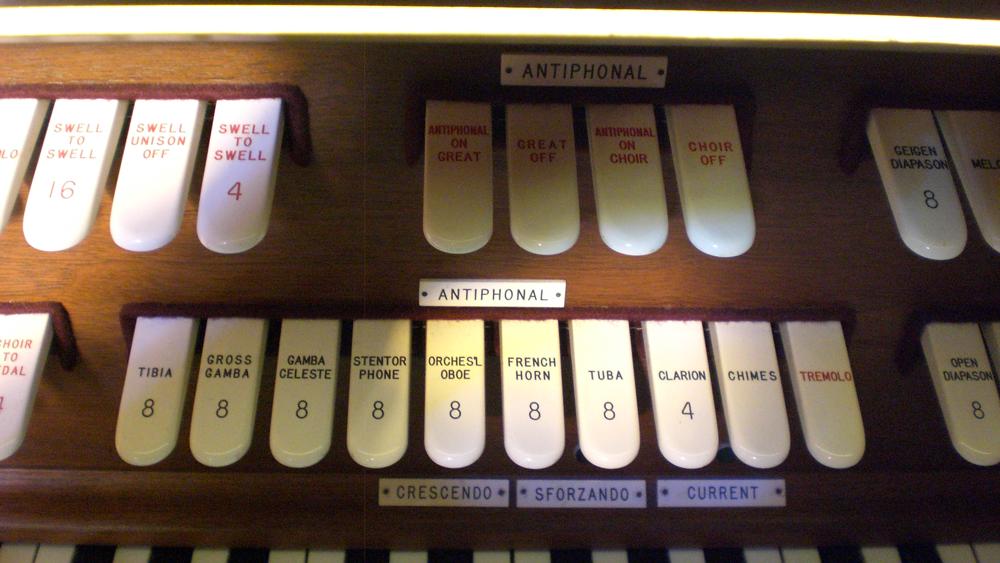
The Antiphonal is affected by the sub/super couplers of the manual to which it is coupled. It is not affected by the Choir to Great couplers. For example, the Antiphonal Tibia can be coupled to both Choir and Great, with the Choir super and Great sub, super, and unison off couplers added. One will then hear an 8' and 4' tibia on the Choir and a 16' and 4' Tibia on the Great.
If there are no stops on the Great, and the Antiphonal Tibia is coupled to the Choir, and the Choir to Great coupler is added, the Tibia will not play on the Great.
In the early 2000's, water damage was repaired by Ray Brunner, and blank pedal tabs were connected to the 16' Open Wood behind the case in front and to the Swell 8' Flute, but the tabs were not labeled or engraved. Therefore, there are 2 x 16' Open Woods on this organ.
Antiphonal, Swell, and Choir tremolos were changed to Wurlitzer style trems by Fabry, and the Antiphonal trem was adjusted properly for the tibia....real theatre shake on the antiphonal ranks.
Database Manager on February 10th, 2012:
Identified through information from Jack Umholtz -- Rebuild of previously modified 1923 Moller.
Related Instrument Entries: M. P. Möller (Opus 3856, 1923)
Something missing or not quite correct?Add NoteorAdd WebpageorAdd Cross ReferenceorSuggest an Edit