W. W. Kimball Co.
1900
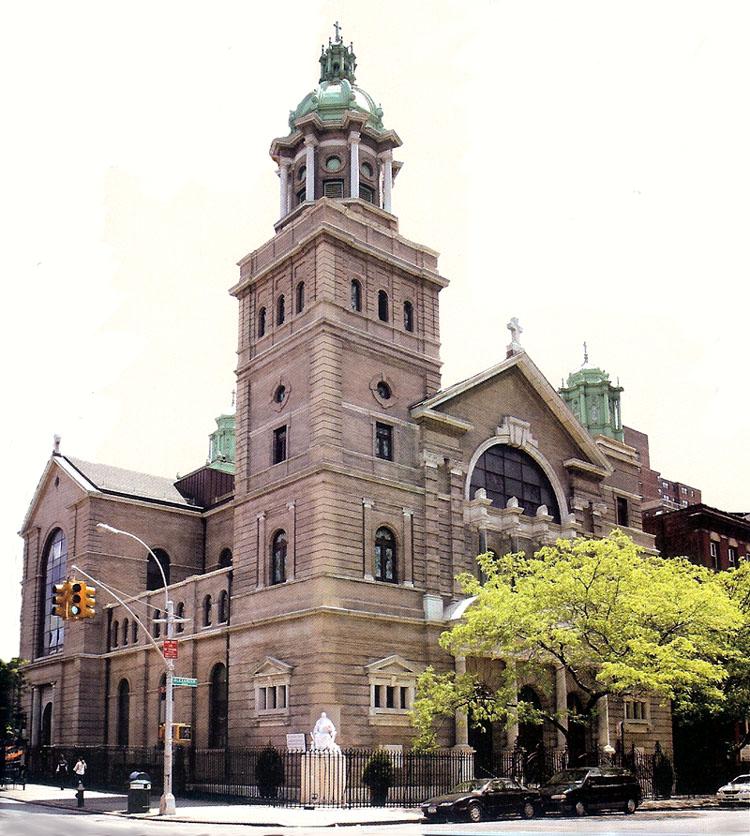
St. Jerome Catholic Church
230 Alexander Avenue
New York City: The Bronx, NY, US
37 Ranks
EXPLORE IMAGESVIEW STOPLISTSomething not quite correct?Suggest an Edit
IMAGES
Something missing or not quite correct?Add ImageorSuggest an Edit
STOPLISTS
Something missing or not quite correct?Add Stoplist
CONSOLES
Builder: Unknown
Position: Console in Fixed Position, Center
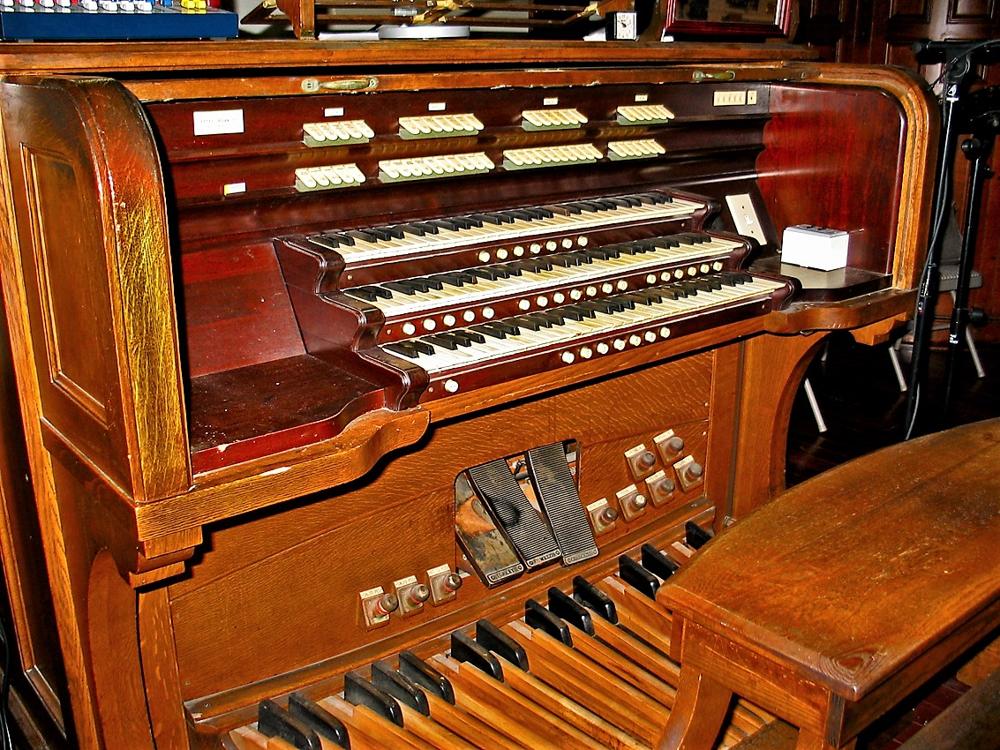
Design: Traditional With Roll Top
Pedalboard Type: Concave Radiating (Meeting AGO Standards)
Features:
3 Manuals (61 Notes)32 Note Pedal4 Divisions35 Stops36 RegistersElectrical Key ActionElectrical Stop ActionCrescendoCombination Thumb Piston(s)Combination Toe Piston(s)Sforzando Toe Piston(s)Stop Layout: Stop Keys Above Top Manual
Expression Type: Unknown
Combination Action: Adjustable Combination Pistons
Control System: Unknown or N/A
Something missing or not quite correct?Add ConsoleorSuggest an Edit
DETAILS
This instrument is: Extant and Playable in this location
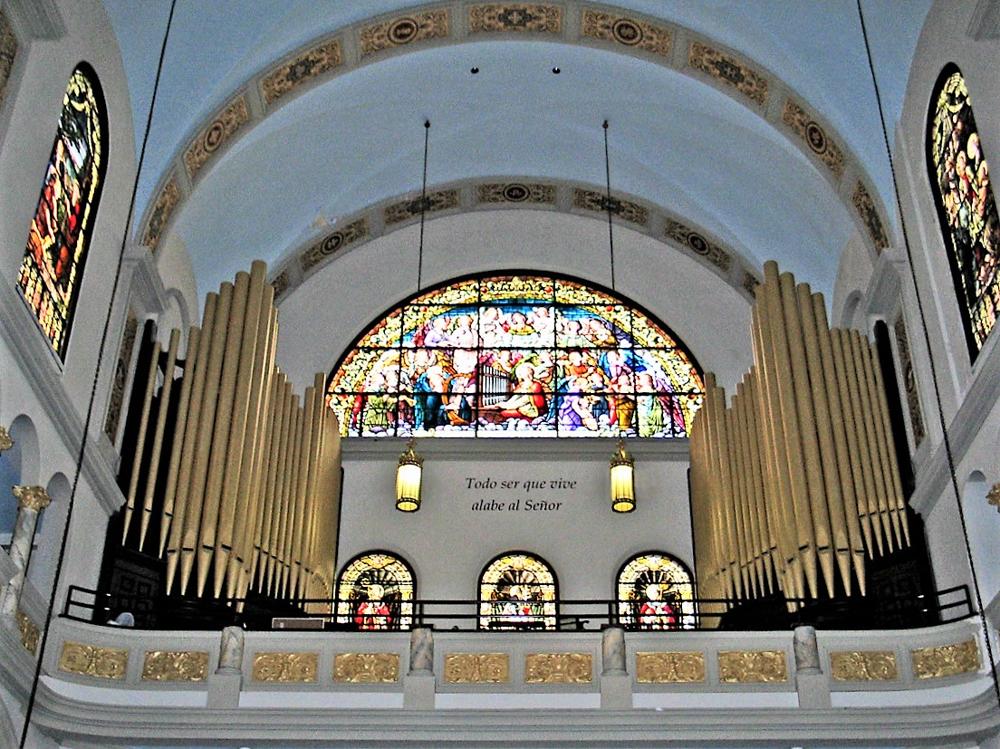
From the NYC AGO NYC Organ Project: The organ in the second St. Jerome's Church was originally built by the W.W. Kimball Company of Chicago. Kimball installed the pipes and mechanisms behind two cases that flank the stained-glass windows in the gallery. On the left side are the Great and Choir divisions, with speaking façade pipes from the Great 16' and 8' Diapasons, and on the right side are the Swell and Pedal divisions. Kimball employed tubular-pneumatic action, a feature that proved to be unreliable in many of that firm's organs of the period. At an unknown time, the organ was mechanically rebuilt by the Estey Organ Company of Brattlesboro, Vt. Estey installed electro-pneumatic action and the three-manual console that exists today.
After more than a century of use and water damage the organ was nearly unplayable. In 2012 the church contracted with Glück Pipe Organs of New York City to restore various components of the historic instrument. During restoration work, the date "August 16, 1900" was found written inside one of the windchests.
Something missing or not quite correct?Add NoteorAdd WebpageorAdd Cross ReferenceorSuggest an Edit