Hutchings Organ Co.
Opus No.1724, 1916
New Jerusalem Church (Swedenborgian)/Church of the Open Word
19 Highland Ave.
Newtonville, MA, US
38 Ranks
EXPLORE IMAGESVIEW STOPLISTSomething not quite correct?Suggest an Edit
🤝 Instrument entries in Massachusetts sponsored by:
We are grateful for the generous support of our sponsors, who make it possible for us to continue our mission of preserving and promoting the rich history of pipe organs across the globe.

IMAGES
Something missing or not quite correct?Add ImageorSuggest an Edit
STOPLISTS
Something missing or not quite correct?Add Stoplist
CONSOLES
Builder: Unknown
Position: Unknown
Design: Unknown
Pedalboard Type: Unknown
Features:
4 Manuals 40 StopsElectrical Key ActionElectrical Stop ActionStop Layout: Unknown
Expression Type: Unknown
Combination Action: Unknown
Control System: Unknown or N/A
Something missing or not quite correct?Add ConsoleorSuggest an Edit
DETAILS
This instrument is: Extant and Playable in this location
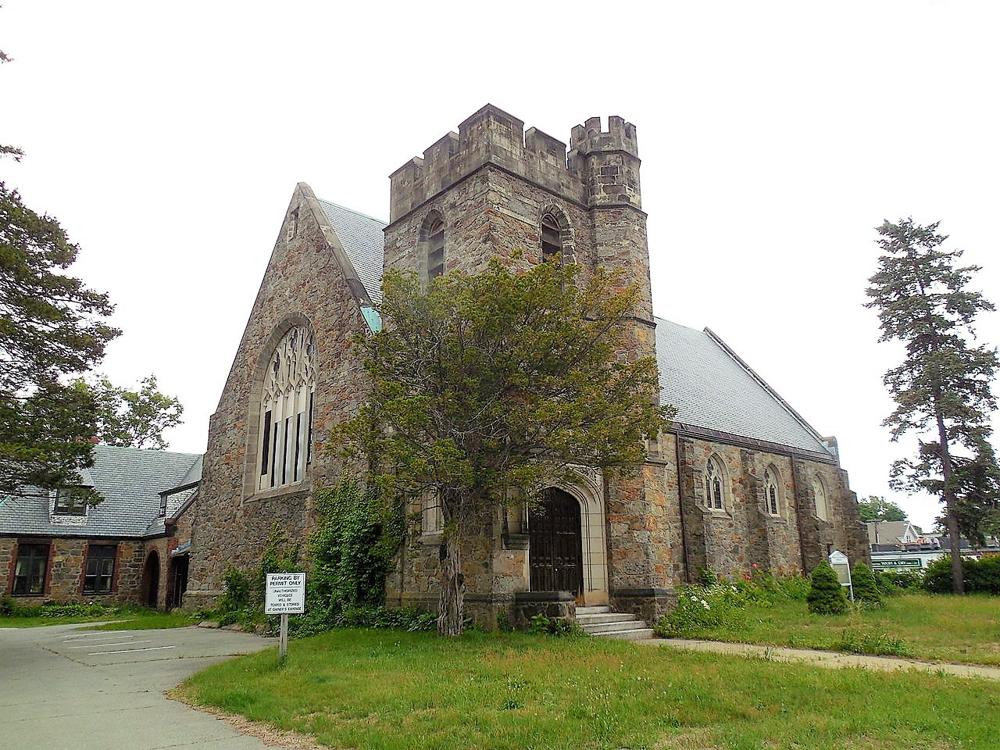
The building was designed by Cram & Ferguson in 1893, making it one of their earliest designed; there was an article on wickedlocal.com October 14, 2021, saying that the New Art Center hoped to purchase the building; however the facility and address were not on the NAC website when checked on August 7, 2014.
Scot Huntington on June 19th, 2021:
This organ is in pristinely original condition, even down to its wiring and combination action, although it has been barely functional for a decade or more following cellar flooding. It may be one of the most intact organs of its size and age in the country-- essentially a time capsule trip back in time-- as there are virtually no survivors of this lost period in American organ history. This is one of the last organs of its size built by the Hutchings company in its final incarnation in the town of Waltham. With the congregation dwindling in recent years, the congregation merged with another and the building was turned over to the denomination. The building is to be turned into condominiums, and the organ needs to find a home. This instrument is worthy of an OHS Historic Citation of the highest ranking. As an intact example of early 20th-century organbuilding and technology, it is irreplaceable.
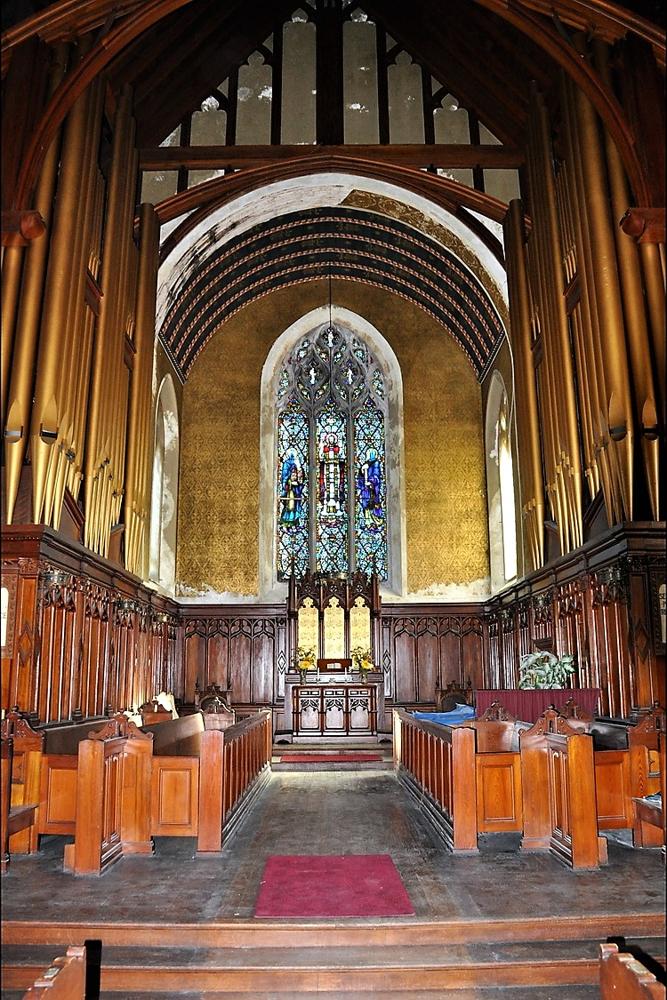
The instrument is placed in a chamber in the divided chancel. The console is all electric, and there are two combination actions. The main combination action was set via a remote setterboard, still intact, and was a blind system-- i.e. it does not move the stop knobs, indicator lights show the selected combination, and the stopknobs are disengaged allowing them to be set for another registration. The second is a traditional console capture system allowing instantaneous changes by the organist . With the organ barely operational at the time of inspection, it is unclear if the capture system replaced the original setterboard system, of if they could function interchangeably. There is no obviously-labeled device that alternates between the two. The drawknob console uses oblique knobs in straight rows both vertical and horizontal.
The chests employ Hutchings sidebar pitman chests. A 5 h.p. Westinghouse motor powers a Spencer blower with a 7" static. The Echo is located in a chamber at the back of the nave. The Swell is on one very large chest with a walkboard down the center, the treble extensions stand on a separate chestlet, and there is a double set of shades facing the nave, operated by a pneumatic machine. The spotted metal pipework retains it cone tuning. The stone church built in the 1890s was designed by Ralph Adams Cram.
Database Manager on October 30th, 2004:
Status Note: There 1989
Something missing or not quite correct?Add NoteorAdd WebpageorAdd Cross ReferenceorSuggest an Edit