Dirksen Organs (R.W. Dirksen)
1955
Christ Church Cathedral, Episcopal
Sanctuary
166 Market Street
Lexington, KY, US
8 Ranks - 373 Pipes - 1 Physical Divisions
EXPLORE IMAGESVIEW STOPLISTSomething not quite correct?Suggest an Edit
IMAGES
Something missing or not quite correct?Add ImageorSuggest an Edit
STOPLISTS
| Manual (I)🛈 | ||
| 8' | Nason Flute🛈 | 49 |
| 4' | Rohrflute🛈 | 49 |
| 2' | Principal | 49 |
| 1 3⁄5' | Tierce [tc]🛈 | 37 |
| 1 1⁄3' | Larigot [GG]🛈 | 42 |
| III | Zimbel | 147 |
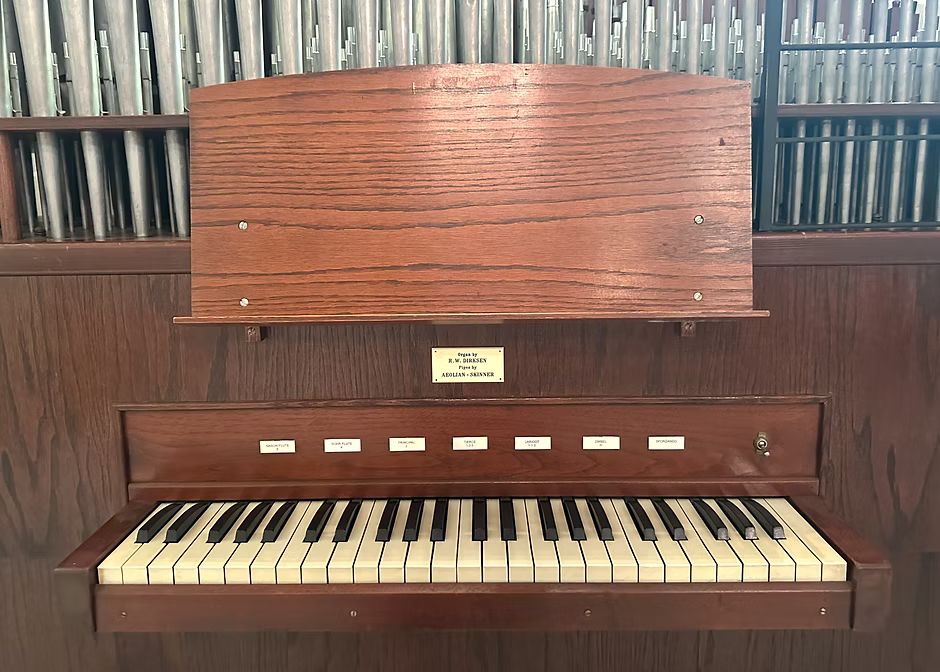
Stop are actuated by reversible toe studs at the base of the instrument. The toe stud labels are above the manual. An 8th toe stud is 'Sforzando' which actuates all 6 stops at once.
Open In New TabSomething missing or not quite correct?Add StoplistorSuggest an Edit
CONSOLES
Builder: Dirksen Organs (R.W. Dirksen)
Position: Keydesk Attached
Design: Traditional Without Cover
Pedalboard Type: No Pedalboard
Features:
1 Manuals (49 Notes)✗ No Pedal1 Divisions6 Stops6 RegistersElectrical Key ActionElectrical Stop Action✓ Sforzando Toe Piston(s)Stop Layout: Other
Expression Type: No Enclosed Divisions
Combination Action: None
Control System: Unknown or N/A
Something missing or not quite correct?Add ConsoleorSuggest an Edit
DETAILS
This instrument is: Extant and Playable in this location
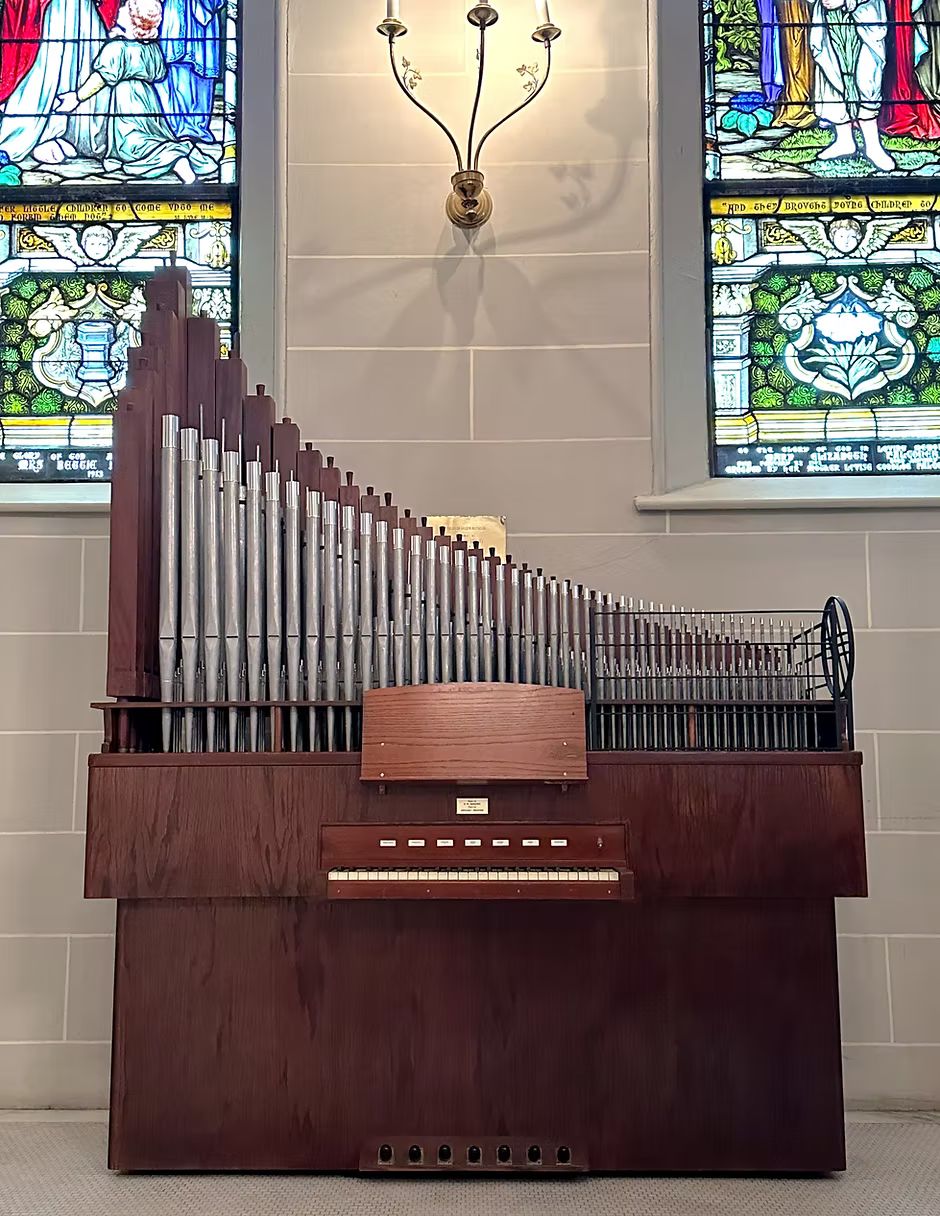
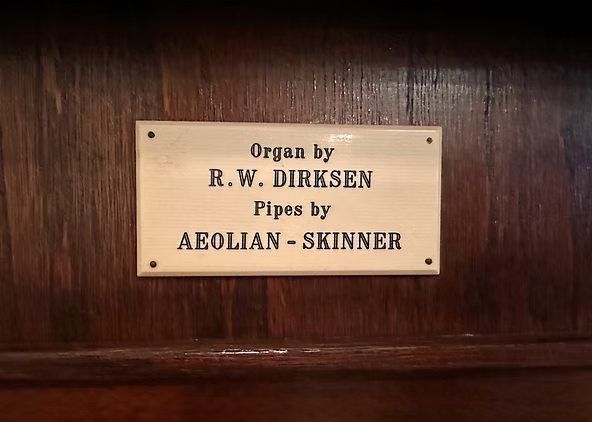
From the Cathedral website "Cathedral Organs": "This portable organ was designed and built by Richard Watson Dirksen, owner of the Freeport Organ Co. in Freeport, Illinois in 1955. The 373 pipes were made by the Aeolian-Skinner Organ Company in 1953-54 under the direction of G. Donald Harrison and Joseph Whiteford, the chief officers of the company at that time."
"It has been used for many performances in Washington National Cathedral and on many concert stages around the area as a "continuo", accompanying organ for choral/orchestral music of the Baroque period. It weighs 780 pounds with pipes in place. The action is a modified direct-electric; the tiny blower was made by Dirksen out of a ten-pound coffee tin, and a small Swiss-built motor."
"The 49-note keyboard (4 octaves) is all that is required for music appropriate to the instrument. The 7 toe-studs on the bottom control the "off" or "on" of the stops (ranks of pipes named). In spite of its small size, the 147 fiery little mixture pipes in ranks of three, just behind the front metal pipes, provide a volume and intensity of tonal excitement that will support the singing of a congregation."
~ Richard Wayne Dirksen
Something missing or not quite correct?Add NoteorAdd WebpageorAdd Cross ReferenceorSuggest an Edit