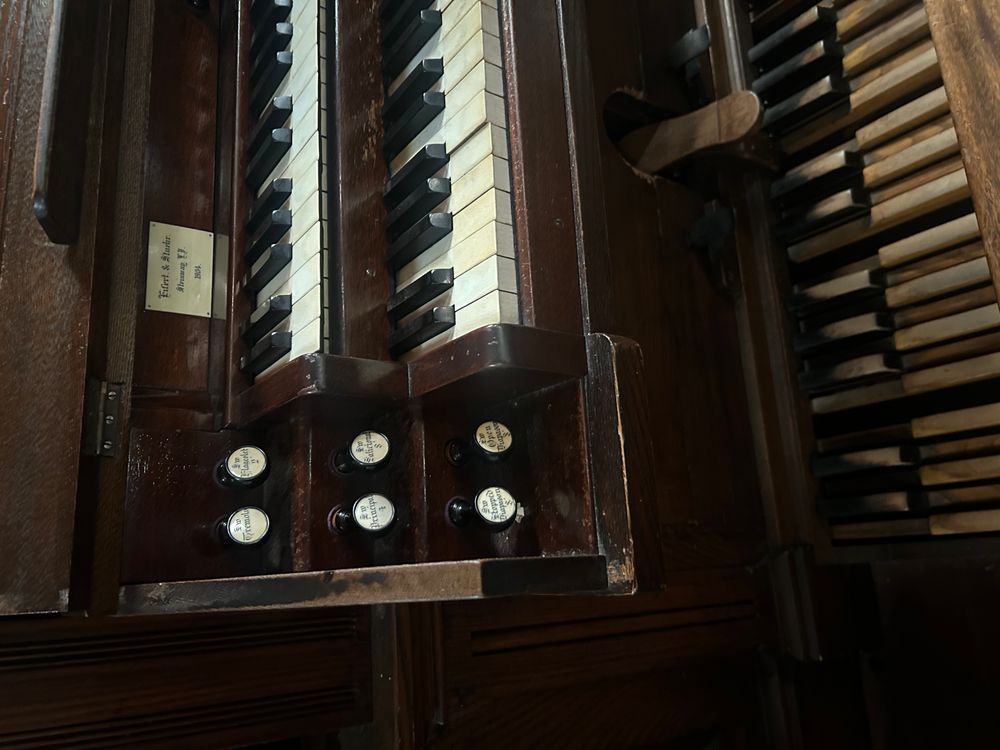
Eifert & Stoehr
1904
Wartburg Home
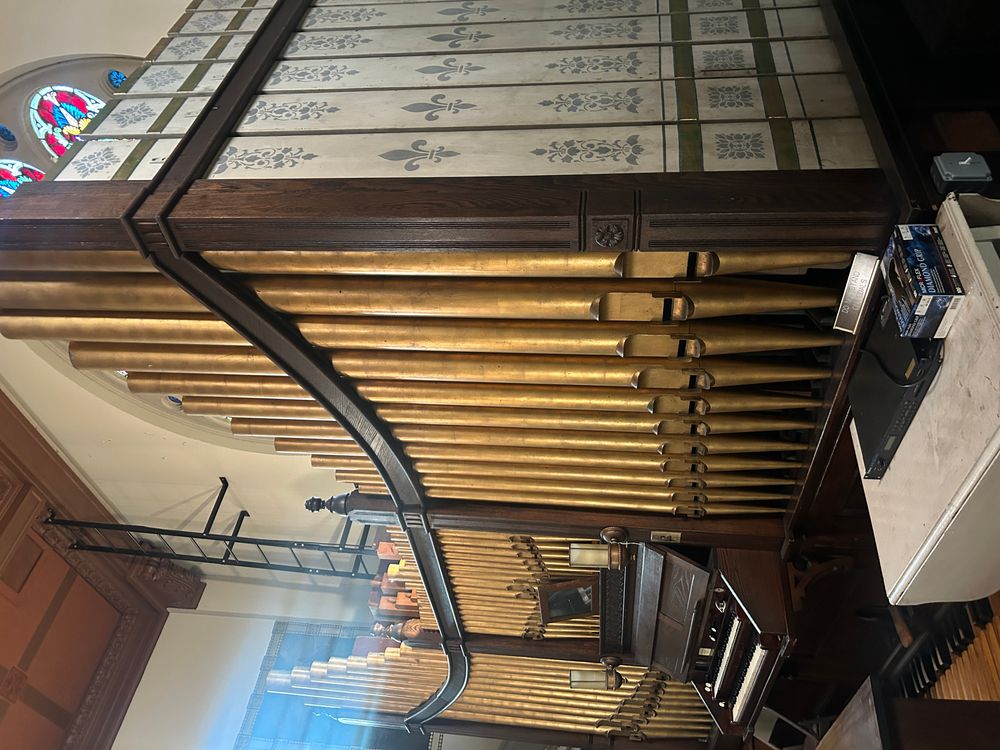
Chapel; rear gallery
1 Wartburg Place
Mount Vernon, NY, US
10 Ranks - 3 Physical Divisions
Something not quite correct?Suggest an Edit
IMAGES
Something missing or not quite correct?Add ImageorSuggest an Edit
STOPLISTS
| Great (I) | ||
| Gr 8' Open Diapason | ||
| Gr 8' Melodia | ||
| Gr 8' Dulciana | ||
| Gr 4' Flute | ||
| Swell to Great |
| Swell (II - Expressive) | ||
| Sw 8' Open Diapason | ||
| Sw 8' Stopped Diapason | ||
| Sw 8' Salicional | ||
| Sw 4' Principal | ||
| Sw 2' Flageolet | ||
| Sw Tremolo |
| Pedal | ||
| Ped 16' Bourdon | ||
| Great to Pedal | ||
| Swell to Pedal |
COMBINATION TRUNDLES: 2 unmarked foot trundles; PEDAL MOVEMENTS: Swell Expression (balanced); ACCESSORIES: Bellows Signal
Open In New TabSomething missing or not quite correct?Add StoplistorSuggest an Edit
CONSOLES
Builder: Eifert & Stoehr
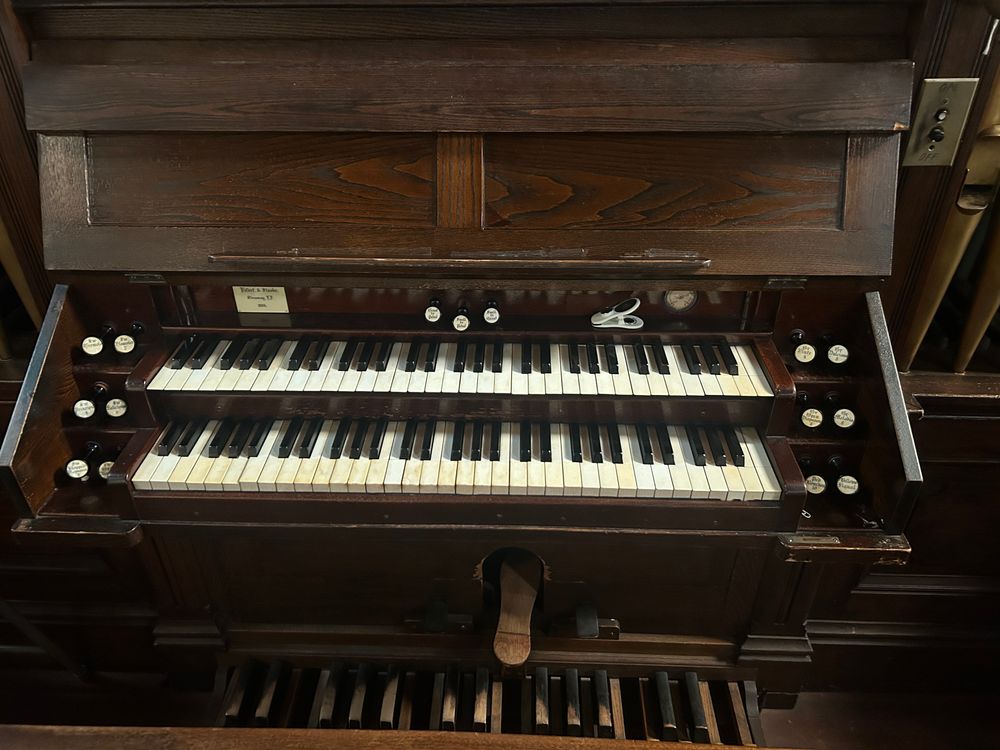
Position: Keydesk Attached
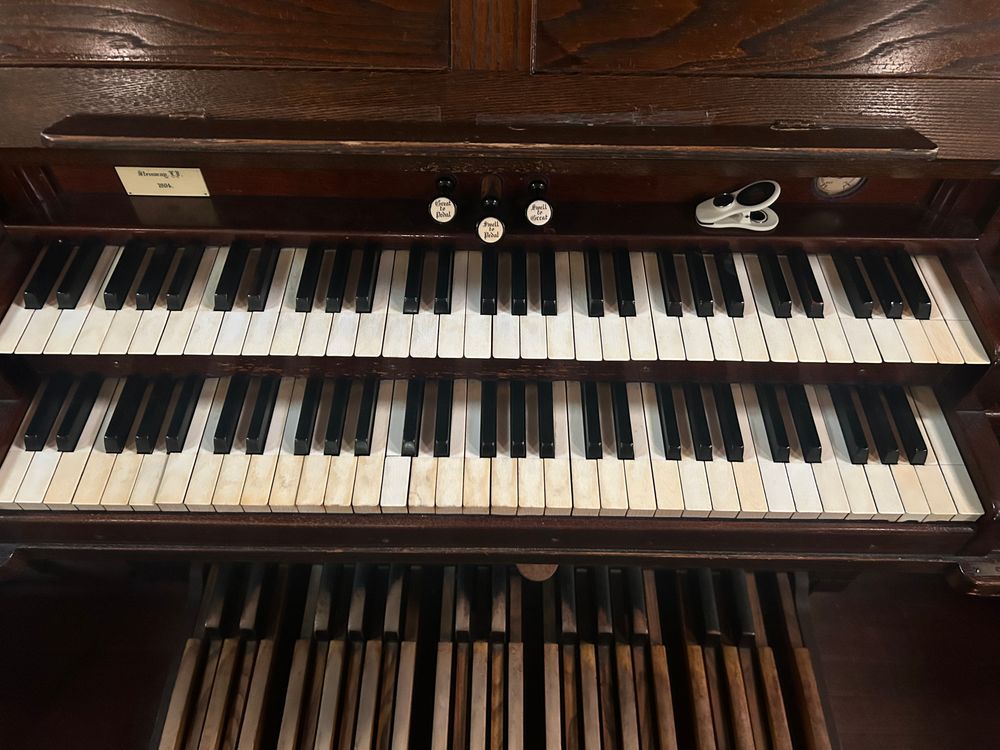
Design: Traditional With a Keyboard Cover That Can Be Lifted To Form a Music Rack
Pedalboard Type: Flat Straight
Features:
2 Manuals (61 Notes)30 Note Pedal11 Stops14 RegistersMechanical (Unknown) Key ActionMechanical Stop ActionCombination Trundle(s)Stop Layout: Drawknobs in Horizontal Rows on Terraced/Stepped Jambs
Expression Type: Balanced Expression Shoes/Pedals (Not Meeting AGO Standards)
Combination Action: Fixed Mechanical
Control System: Unknown or N/A
Something missing or not quite correct?Add ConsoleorSuggest an Edit
DETAILS
This instrument is: Extant and Playable in this location
Updated through online information from Daniel Lockwood [October 25, 2025]: The electric blower is functional, and the power switch is on the lower right side of the facade image. The Bellows Signal is no longer functional due to the electronic blower. The organ sounds amazing and is played regularly in 2025. The swell pedal needs repair, I believe. The trundle pedals are functional, the right pedal pulls all the great stops, the left pedal closes them, I believe. I will check again.
Daniel Lockwood on October 25th, 2025:
The Builder was located in Steinway, Long Island, hence the builder plate displaying "Steinway". In the late 19th century it was called Steinway Village. It is adjacent to what later became La Guardia Airport in what is today known as Astoria Queens. It was a "Company Village" of workers for the piano manufacturer Steinway & Sons. Many other German workers and companies relocated there, including Organ builders such as Eifert & Stoehr, as the labor force was keyboard / piano builder expertise. At the time they were trying to escape from unions, strikes and protests that happened in Manhattan where they had a factory. They were still unionized eventually in Astoria.
"Steinway Village is a fascinating slice of New York history—part industrial innovation, part utopian experiment. Here's how it came to be:
🎹 Origins and Vision
Founded by William Steinway in the 1870s, the village was built in Astoria, Queens, as a company town for Steinway & Sons piano workers.
Steinway wanted to escape the labor unrest and crowded conditions of Manhattan, so he purchased 400 acres of rural land across the East River.
🏘️ A Model Community
Steinway Village was designed to be self-sufficient and idyllic:
Brick homes for workers advertised as “country homes with city comforts”
Fresh water, tree-lined streets, and access to public amenities
A school, firehouse, post office, and churches were all built by Steinway himself
🏭 Industrial Hub
Beyond the piano factory, the village included:
A sawmill and foundry for piano parts
A silk factory
One of the first automobile factories in the U.S.
🎠 Cultural Touches
Steinway also developed North Beach Amusement Park, dubbed the “Coney Island of Queens,” which operated from 1895 to 1915
The village had a library started with William’s personal book collection, now part of the Queens Library system
🏛️ Legacy
Though the original historic district designation was nullified in 1975, remnants of Steinway Village still exist:
The Steinway Mansion
The Steinway Reformed Church
Rows of preserved brick homes on 20th Avenue and 41st Street
It’s a rare example of a company town that blended industrial ambition with a genuine attempt to improve workers’ lives. "
Eifert & Stoehr custom built pipe organs in the NYC area, including the pipe organ at Wartburg Home of the Evangelical Lutheran Church which was an orphanage from 1850 until the mid 20th century.
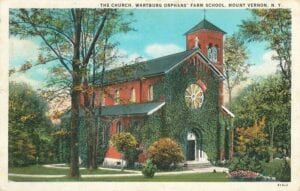
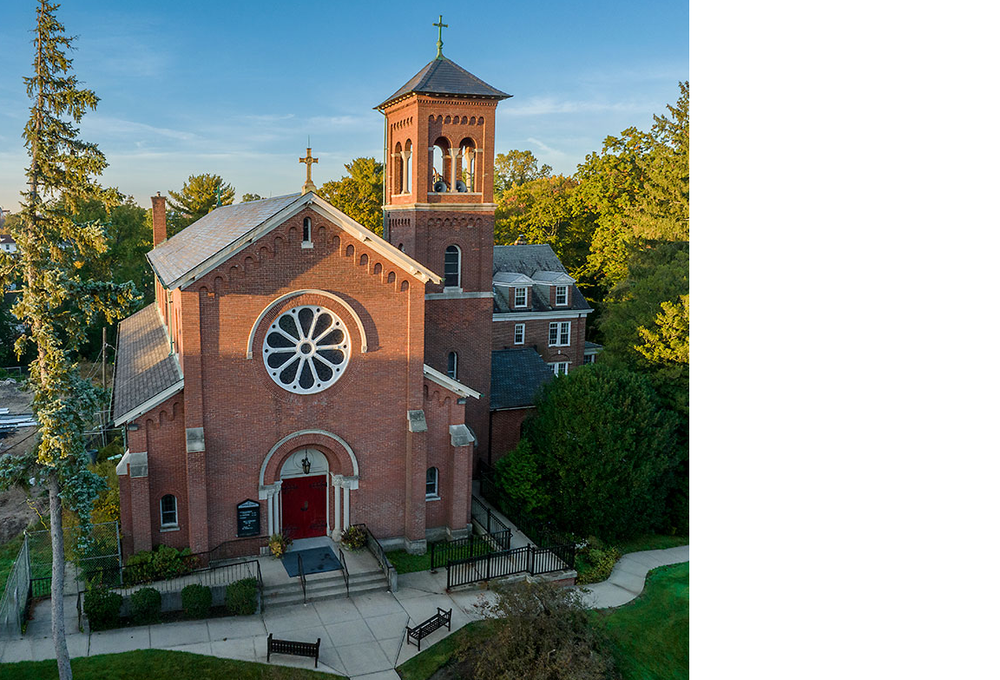
The Chapel was constructed in 1904 and the organ was installed as a part of that commissioning. The organ was repaired around 1987.
Paul R. Marchesano on October 24th, 2025:
From the history web page: Rev. Dr. William Passavant, a Lutheran minister in New York City, is moved at the sight of children orphaned by the Civil War. He is introduced to Peter Moller, a sugar magnate, who lost his son during the conflict. Passavant persuades Moller to build a “living memorial” for his late son that would provide a home for these orphans. The two men raise the funds necessary to purchase 121 acres of farmland in Mount Vernon, New York – a site that reminds them of Wartburg Castle in Germany and inspires its name.
After a fire destroys the original chapel, a new one in the Basilican style is constructed, financed by many individual donations. This handsome red brick building features stained glass windows with scenes from Jesus’ life that emphasize his concern for children and the infirm.
Database Manager on October 30th, 2004:
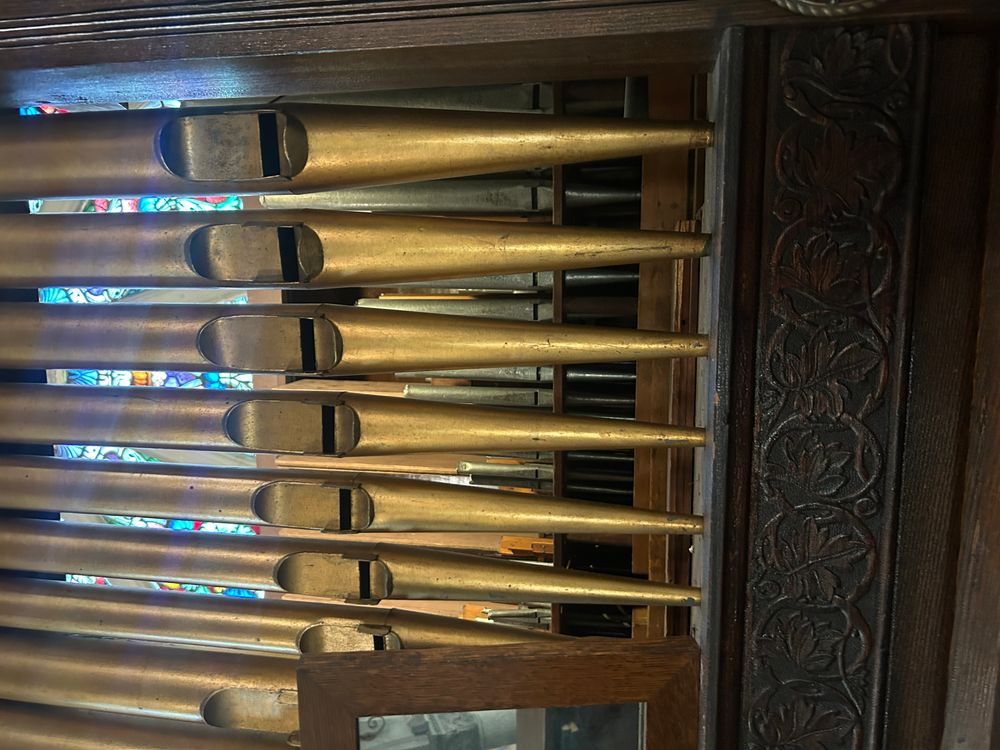
Restored by A. & J. Organs in 1988. Contains some 1865 pipework.
- YouTube: Service of Prayer and Remembrance (September 21, 2025) Wartburg Chapel Worship service with organ played
Something missing or not quite correct?Add NoteorAdd WebpageorAdd Cross ReferenceorSuggest an Edit